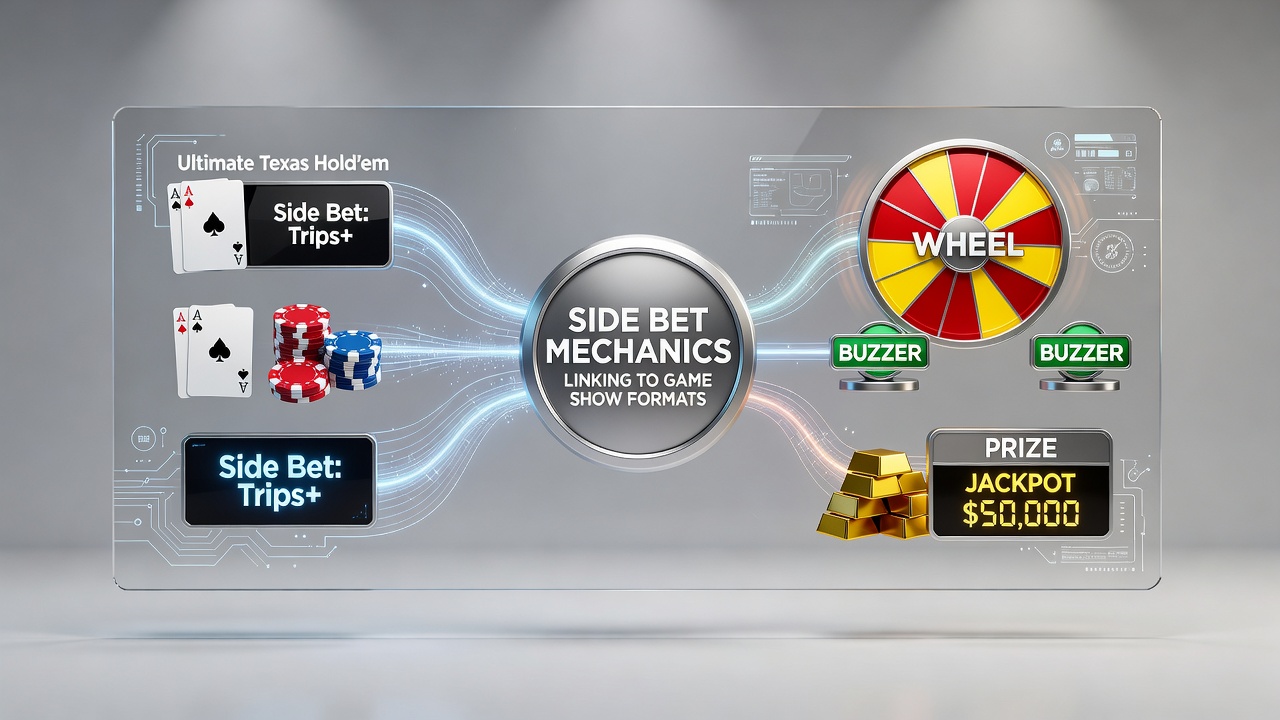
Side Bet Mechanics Linking Poker Variants Like Ultimate Texas Hold'em to Game Show Formats
Side bet mechanics in poker variants such as Ultimate Texas Hold'em incorporate optional wagers that trigger payouts based on specific card combinations and these features create structural parallels with bonus segments in game show formats where participants unlock additional rewards through defined conditions. Data from gaming regulators shows that these side bets operate independently from the main hand yet influence overall session dynamics by offering multipliers ranging from 3-to-1 for three-of-a-kind up to 50-to-1 for royal flushes in standard implementations.
Core Structure of Side Bets in Ultimate Texas Hold'em
Ultimate Texas Hold'em requires players to form the best five-card hand from two personal cards and five community cards while side bets like the Trips wager activate whenever the player achieves three-of-a-kind or better regardless of the dealer outcome. The Bad Beat side bet pays when the player loses with a strong hand such as three-of-a-kind or higher and reports from the Nevada Gaming Control Board indicate that these optional bets account for a measurable portion of table revenue in regulated markets during periods including August 2026. Observers note that the ante and blind bets drive the primary play but side bets introduce layered decision points that mirror the incremental risk-reward choices presented in televised game formats.
Mathematical Foundations and Payout Configurations
Side bet payouts follow fixed tables calibrated to house edge percentages that typically range between 2 percent and 8 percent depending on the specific variant and jurisdiction while combinatorial analysis determines the frequency of qualifying hands. For instance the Trips bet in many Ultimate Texas Hold'em tables pays 3-to-1 for three-of-a-kind, 4-to-1 for straight, 6-to-1 for flush, 30-to-1 for full house, 40-to-1 for four-of-a-kind and 50-to-1 for straight flush or royal flush. Researchers at academic institutions have examined these structures and found that the independent resolution of side bets allows simultaneous tracking of multiple outcomes similar to how game shows accumulate points across separate challenge stages without altering the core competition rules.
Parallels Between Side Bet Triggers and Game Show Bonus Mechanics
Game show formats often feature bonus rounds that activate after meeting threshold conditions such as matching symbols or surviving elimination rounds and side bets replicate this activation logic through card-rank thresholds that unlock scaled rewards. In one documented case experts observed that players engaging with Trips or similar wagers experience heightened engagement during the reveal phase of community cards which parallels audience anticipation in shows where contestants open cases or spin wheels for escalating prizes. Data shows that this shared emphasis on conditional escalation encourages repeated participation because each hand or round carries the potential for an auxiliary payout sequence independent of the primary result.
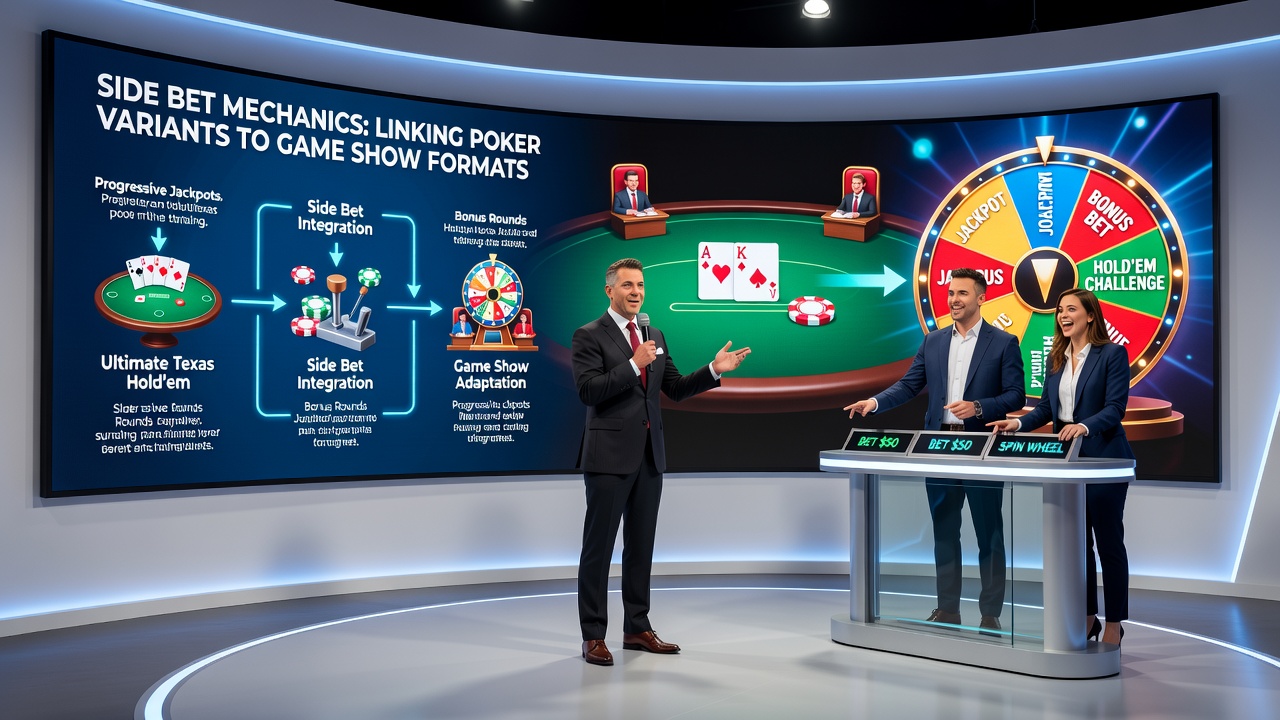
Industry analyses further reveal that hybrid table designs increasingly incorporate visual and audio cues during side bet resolutions that echo the production elements of game shows including animated graphics and sound effects that mark successful triggers. Those who study player behavior across formats have documented that these sensory enhancements sustain attention spans during intervals between main-hand decisions while the underlying mathematics remains rooted in probability tables shared with traditional poker side wagers.
Regulatory Oversight and Market Data in 2026
Regulatory bodies in multiple regions including the Nevada Gaming Control Board and Australian state commissions track side bet performance through mandatory reporting that separates main-game and auxiliary wager volumes. Figures compiled for August 2026 demonstrate steady contribution from these mechanics within broader poker variant revenue streams and analysts attribute part of the stability to the format's compatibility with live-streamed and broadcast adaptations that borrow pacing techniques from established game shows. External audits confirm that payout percentages stay within approved ranges while player education materials supplied by operators detail the independent nature of each side bet to maintain transparency requirements across jurisdictions.
Adaptations in Broadcast and Digital Environments
Television productions and online platforms have adapted side bet elements into interactive overlays that allow viewers or remote participants to place parallel wagers during featured hands and these adaptations draw directly from game show conventions where home audiences engage through companion apps. Studies conducted by research institutions indicate that the addition of real-time side bet tracking increases session duration metrics without altering core poker rules and operators report corresponding adjustments in studio setups to accommodate multiple camera angles focused on bonus resolution sequences. The result is a converged product category where traditional table mechanics support extended narrative arcs reminiscent of episodic game show structures.
Conclusion
Side bet mechanics in variants like Ultimate Texas Hold'em establish clear operational links to game show formats through conditional activation systems, scaled payout structures, and supplementary engagement layers that function independently from primary gameplay. Regulatory data from August 2026 and earlier periods confirms consistent usage across markets while academic examinations highlight the combinatorial similarities that enable these cross-format adaptations. The integration continues to evolve through broadcast and digital channels where visual and interactive elements further align table game experiences with established bonus-round conventions.